Inermis Anthias
Inermis Anthias is backordered and will ship once an order is placed. Contact us for delivery timeframes.

Delivery and Shipping
Delivery and Shipping
We highly advise same day airfreight for all fish shipping, although overnight courier is also available nationwide.
- Airfreight is a flat $75 rate anywhere in NZ and can include up to 10 fish/coral for the single charge. We can also include dry goods/frozen food in the order, up to a total weight of 75kg.
- Overnight courier is $25-50 depending on the destination and polybox used.
For more information on shipping, head to our shipping page!
What we're feeding
What we're feeding
Nutrition, like humans, is important for fish. You get out what you put in. Therefore, EMA places great emphasis on providing all our fish a varied diet. Below is an example of what our fish are currently feeding on:
- Fauna Marin Soft Multi Mix
- Fauna Marin Veggie Flakes
- Frozen Nutrition Mysis
- Frozen Nutrition Formula One
- Frozen Nutrition Formula Two
- Live Brine Shrimp
- Fauna Marin 100% Natural Green Seaweed
- Cockles (Mainly for butterflies/angels, available from your local supermarket).
All our staff are trained in fish nutrition, so if you require any guidence, please ask! Frozen/Dry food can also be sent with your airfreight consignment with no extra charge, so add these to the order if you wish and we will combine them into a seperate box.
Acclimation tips
Acclimation tips
Adjusting to a new aquarium is the most stressful event a fish can go through, so it's important to understand the following for long term success:
- Consider your existing fish. When adding a new fish, often existing fish can become aggressive to assert their dominance. This can be hard on the new fish, due to the stress of moving aquariums and then dealing with aggressive fish. Consider removing the existing fish using a fish trap (ours is available for loan, just ask) and place any aggressive fish in the sump for a couple of weeks while the new fish adjusts to their new home.
- Always acclimate without any lights on. Bright light can be stressful, especially when a fish has been in transit.
- Slowly open the box to avoid light stress
- Use the float acclimation method and ensure acclimation isn't too long - we recommend up to 30 minutes.
- If a fish is showing signs of stress during acclimation, consider speeding up the acclimation. Remember, stress is the number one killer of fish.
- Once you've adjusted to salinity and temperature through acclimation, release the fish into the aquarium (but not the bag water).
- Give the fish space. Although adding a new fish is an exciting time, remember that the fish is stressed, so give the fish space while he/she settles in. Avoid sudden movements, running around the tank or tapping on the glass.
- Have realistic expectations. It is normal for new fish to take a while to eat, or show natural behaviours. This is a transition period, so the less stress you can place the fish under, the better the long term result.
- Ask. Seems obvious, but our staff can't help if we don't know. Always feel welcome tor each out for advice. You can either use our Chat function 24/7, or email/Facebook us.
Customer Reviews
EMA's Promise.
Qualified, Honest Advice Using Techniques & Protocols that we use ourselves.
Description
Description
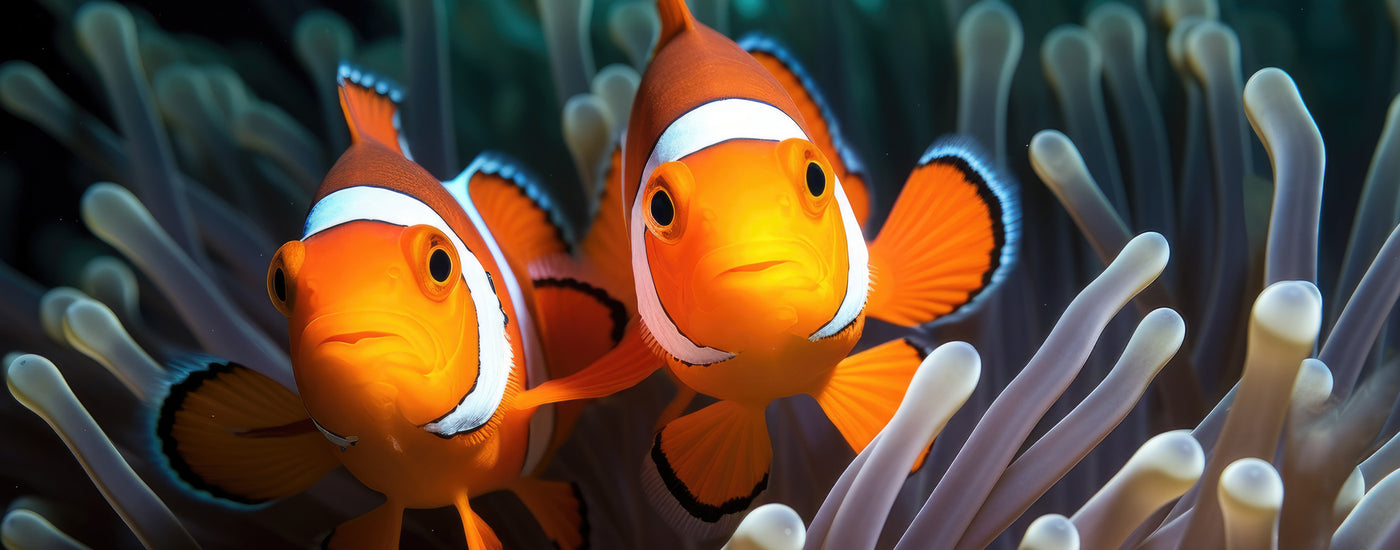
The Inermis Anthias is a small, beautifully marked reef fish that spends its time perched among the rockwork, watching for food. Its red-orange and white pattern stands out up close, making it a lovely choice for a peaceful aquarium where you can enjoy its quieter character.
Care at a glance
| Scientific name | Xenanthias inermis |
|---|---|
| Adult size | Approximately 5–6 cm. |
| Recommended tank size | At least 80 litres of display space for one fish; 100 litres or more is preferable, especially with other fish. |
| Care level | Moderate. Best suited to an established marine aquarium with stable water quality and attentive feeding. |
| Temperament | Generally peaceful and shy, but may defend its favourite perch. |
| Reef suitability | Suitable with corals. Very small ornamental shrimp may be eaten. |
| Diet | Carnivore. Small, varied meaty meals. |
| Keeping more than one | One is the simplest choice for a smaller aquarium. It does not need a group. |
Tank setup and suitability
A peaceful reef aquarium or a fish-only aquarium with plenty of established rockwork can suit this species well. Provide caves, narrow crevices, shaded ledges and several places to perch. Although it is sold as an anthias, it stays close to the rockwork rather than spending the day swimming in open water.
Normal reef lighting is fine when shaded retreats are available. Provide good circulation with calmer areas around its perches, rather than directing a strong jet of water at them. A close-fitting lid and suitably screened overflow openings are sensible precautions for a fish this small.
Water conditions
Temperature: 24–26°C.
Salinity: Around 35 ppt for a reef aquarium.
pH: 8.1–8.4.
Ammonia and nitrite: Undetectable.
Keep conditions stable, maintain good oxygenation and keep up with water testing and regular maintenance. Avoid adding it to an aquarium that is still cycling.
Tankmates and reef compatibility
Choose calm tankmates that will not bully it or take all the food before it has a chance to eat. Avoid large predatory fish and aggressive companions. Gobies and blennies may share its preferred part of the aquarium, so provide separate hiding places and watch for territorial behaviour.
It is suitable with corals, but its small size does not make it harmless to tiny shrimp. Avoid pairing it with very small ornamental shrimp that could fit in its mouth. Keep a single Inermis Anthias in smaller tanks; housing more than one needs extra space, separate retreats and careful observation.
Feeding
Offer two small meals each day, using a variety of foods such as frozen mysis, enriched brine shrimp and finely chopped seafood. Keep pieces small enough to swallow comfortably. Small marine pellets can also be offered, but do not rely on them until you have seen the fish eat them.
A shy fish may wait for food to drift past its shelter. Use a feeding pipette to place food nearby when needed, and check that it actually eats rather than assuming it is getting enough. Naturally occurring pods can supplement its diet, but should not replace regular feeding.
What to expect at home
It may spend much of its time tucked into the rockwork, particularly while settling in. Give it quiet surroundings and easy access to food rather than disturbing its hiding place. This is a fish for enjoying close-up behaviour, not a constantly visible, open-water swimmer.
For help checking compatibility, send us your tank size and current livestock and we’ll help you decide whether an Inermis Anthias is a good fit.
Our Quarantine Procedures
Our Quarantine Procedures
We take livestock seriously. That's why we don't sell anything we wouldn't be comfortable putting in our own tank.
As we are direct from source, we import and sell direct to the public. This means you can buy with confidence knowing EMA prides itself on excellent handling and conditioning protocols.
All our fish held in a quarantine system for a minimum of 3 weeks. During this time, regular water changes are performed, and twice daily (or sometimes more) feedings are performed.
Copper is dosed and checked twice a day for ich and velvet.
During this treatment fish are given formalin baths for brooklynella and a minimum of 3 praziquantel doses is performed for flukes.
Payment & Security
We offer a number of different payment methods, including Credit Card, Afterpay, Q Card, Pay at Collection, Bank Transfer and POLi.
Credit card payments are processed securely using the highest possible security protocols.