
Gold Eye Chalice
Gold Eye Chalice is backordered and will ship once an order is placed. Contact us for delivery timeframes.

Delivery and Shipping
Delivery and Shipping
We offer Courier Services, Same Day Airfreight & Store Collection to suit a range of customers.
Questions? Get in touch!
Customer Reviews
EMA's Promise.
Qualified, Honest Advice Using Techniques & Protocols that we use ourselves.
Description
Description
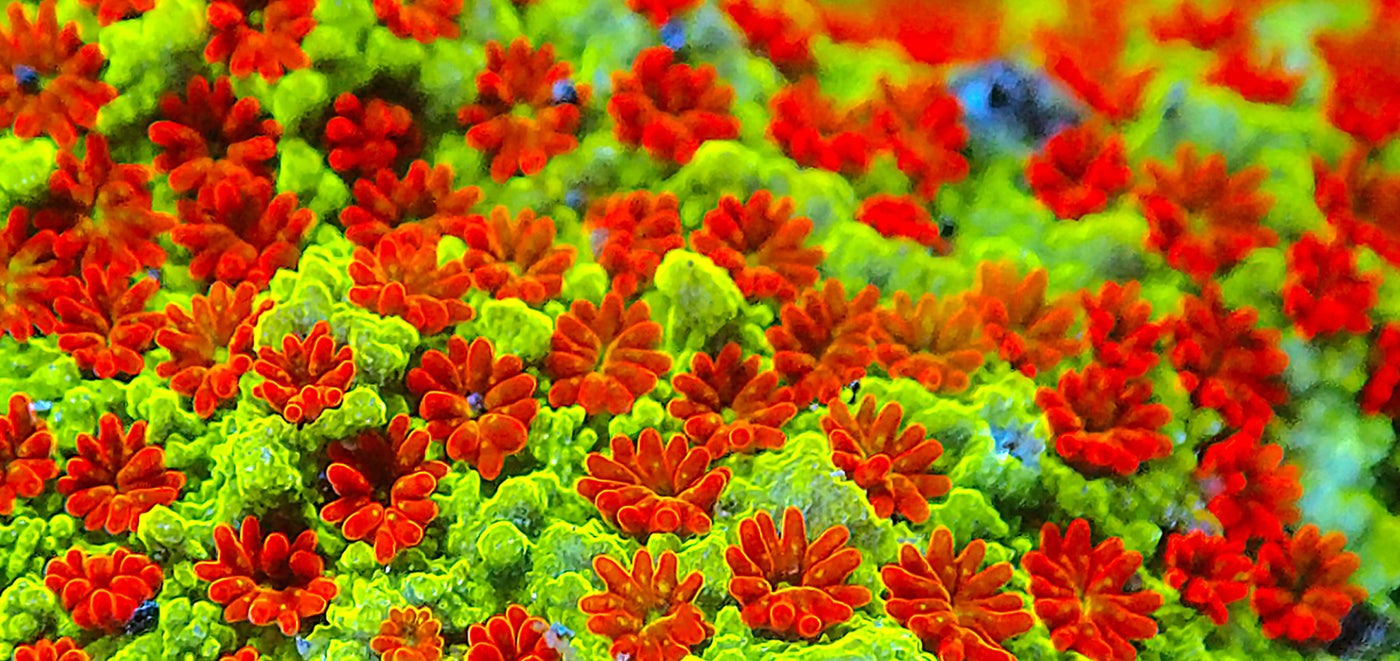
Chalice corals from the family Merulinidae are a classic large polyp stony coral, appreciated for an encrusting or plating growth habit that can cover rockwork in a colourful sheet. They are a familiar sight in established reef aquariums. This variety is notable for its distinct, golden-yellow oral discs, or "eyes," which create a sharp contrast against the main coral tissue.
In a home reef, a chalice will typically grow by encrusting the rockwork it is placed on, sometimes forming upward-growing plates or whorls as it matures. The surface has a bumpy, textured appearance, with each bump housing a polyp. While the base colouration of the coral tissue can range from deep greens to purples and reds, the defining feature here is the bright gold of the polyp mouths. At night, you may see short feeder tentacles extend from these eyes, a sign the coral is ready for a meal.
For best results, place your chalice frag in an area of low to moderate light and flow, typically in the lower to middle sections of the tank. A PAR range of 75-150 is a good target, as too much light can cause the colours to fade. They are famously aggressive corals, known for sending out long sweeper tentacles after dark, so be sure to give them plenty of space—at least 15cm from their nearest neighbours is a safe bet. Chalice corals are active feeders and will benefit from weekly target feeding of small, meaty foods. Maintain stable water parameters, with calcium around 420-440 ppm, alkalinity between 8-9 dKH, and magnesium at 1300-1400 ppm. Acclimate slowly to both water and light to prevent shock.
The unique growth form of a chalice makes it a great addition for adding colour and texture to the lower landscape of a mixed reef. Its plating habit can create overhangs and shaded areas, adding a new dimension to an aquascape. It is a relatively slow grower, which makes it manageable for the long term in a stable system that doesn't have aggressive coral-nipping fish.
This is not a WYSIWYG listing; you'll receive a specimen of the same species with similar size and colouration to the one pictured, hand-picked for health and colour.
Our Quarantine Procedures
Our Quarantine Procedures
We take livestock seriously. That's why we don't sell anything we wouldn't be comfortable putting in our own tank.
As we are direct from source, we import and sell direct to the public. This means you can buy with confidence knowing EMA prides itself on excellent handling and conditioning protocols.
Fish
All our fish held in a quarantine system for a minimum of 3 weeks. During this time, regular water changes are performed, and twice daily (or sometimes more) feedings are performed.
Copper is dosed and checked twice a day for ich and velvet.
During this treatment fish are given formalin baths for brooklynella and a minimum of 3 praziquantel doses is performed for flukes.
Coral
Our coral is quarantined for a minimum of 3 weeks, just like fish. During this time, regular water changes are performed, water testing done, and once a month a Fauna Marin ICP Total is performed.
Corals are inspected for pests/general health and are provided with a pest dip once a week for at least 3 weeks.
If we see signs of pests, the quarantine period is extended and/or additional dips are performed
If coral is bleached/unhealthy, it will remain in quarantine until healthy enough to sell.
Payment & Security
We offer a number of different payment methods, including Credit Card, Afterpay, Q Card, Pay at Collection, Bank Transfer and POLi.
Credit card payments are processed securely using the highest possible security protocols.