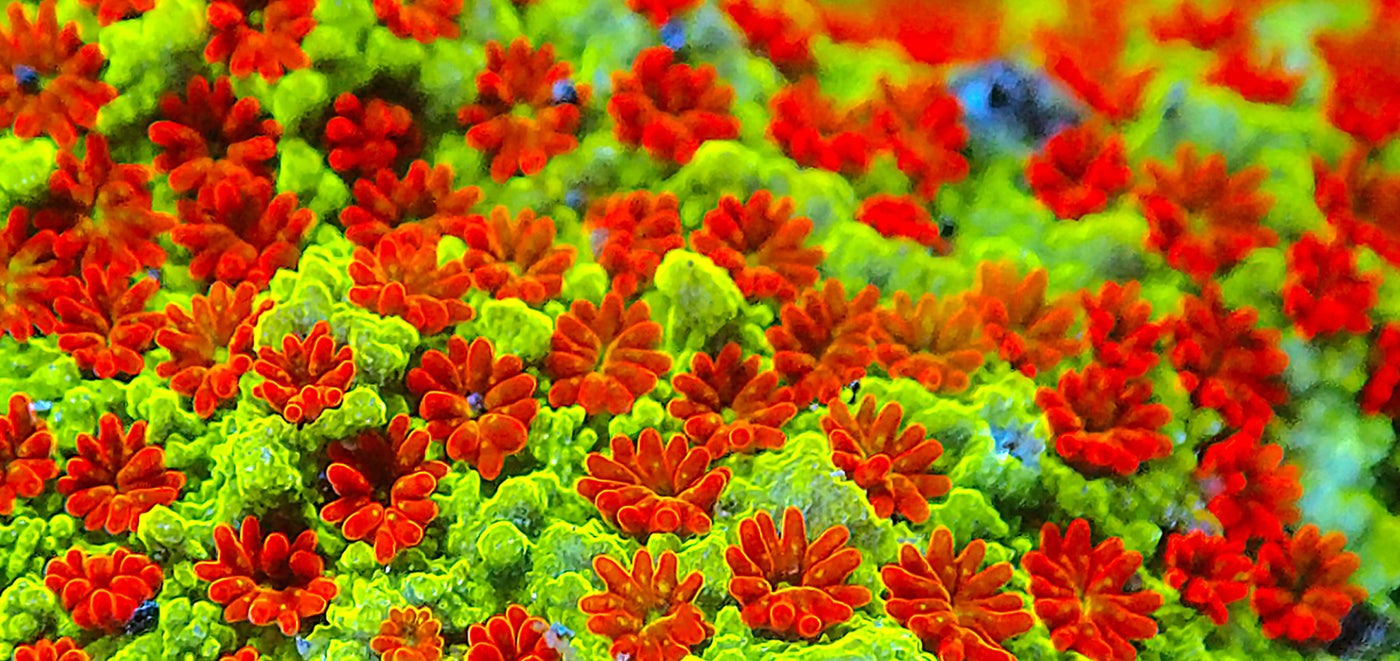

Goniastrea sp. (Brain Coral)
Goniastrea sp. (Brain Coral) is backordered and will ship once an order is placed. Contact us for delivery timeframes.

Delivery and Shipping
Delivery and Shipping
We offer Courier Services, Same Day Airfreight & Store Collection to suit a range of customers.
Questions? Get in touch!
Customer Reviews
EMA's Promise.
Qualified, Honest Advice Using Techniques & Protocols that we use ourselves.
Description
Description
Goniastrea is a genus of large polyp stony corals, often referred to as a type of brain coral. These corals are appreciated in the reef aquarium hobby for their diverse color combinations and interesting surface textures. They are generally hardy and can be a great choice for both intermediate and experienced hobbyists looking to add a classic LPS coral to their collection.
This coral typically forms encrusting or massive boulder-shaped colonies. The surface is covered in corallites that can be either separate (cerioid) or fused into walls (meandroid), creating a distinctive honeycomb or maze-like pattern. Goniastrea species come in a wide range of colors, including greens, browns, reds, and creams, often with the oral discs being a different, contrasting color from the surrounding tissue, which adds to their visual appeal.
Goniastrea corals thrive under moderate lighting conditions, with a PAR range of 75-150 being ideal. They prefer moderate, indirect water flow, which is strong enough to keep their surface clean but not so intense that it prevents their polyps from extending. For placement, the lower to middle sections of the aquarium on the rockwork are usually best. While photosynthetic, they benefit greatly from direct feeding. We recommend target feeding small meaty foods such as mysis, brine shrimp, or specialized LPS coral pellets a few times a week. Maintain stable water parameters with calcium between 400-450 ppm, alkalinity at 8-12 dKH, and magnesium from 1250-1350 ppm. These corals can be semi-aggressive, so provide a few inches of space from neighboring corals to prevent conflicts with sweeper tentacles. Acclimate slowly using a drip method to prevent shock.
For the reef keeper interested in a coral that adds both texture and color, the Goniastrea brain coral is a rewarding species. Its encrusting growth can create a beautiful, living topography over your rockwork, and its willingness to accept food makes it an engaging coral to care for.
This is a WYSIWYG (What You See Is What You Get) item. The coral you see in the photograph is the exact coral you will receive. It is a one-of-a-kind piece with its own unique coloration and shape.
Our Quarantine Procedures
Our Quarantine Procedures
We take livestock seriously. That's why we don't sell anything we wouldn't be comfortable putting in our own tank.
As we are direct from source, we import and sell direct to the public. This means you can buy with confidence knowing EMA prides itself on excellent handling and conditioning protocols.
Fish
All our fish held in a quarantine system for a minimum of 3 weeks. During this time, regular water changes are performed, and twice daily (or sometimes more) feedings are performed.
Copper is dosed and checked twice a day for ich and velvet.
During this treatment fish are given formalin baths for brooklynella and a minimum of 3 praziquantel doses is performed for flukes.
Coral
Our coral is quarantined for a minimum of 3 weeks, just like fish. During this time, regular water changes are performed, water testing done, and once a month a Fauna Marin ICP Total is performed.
Corals are inspected for pests/general health and are provided with a pest dip once a week for at least 3 weeks.
If we see signs of pests, the quarantine period is extended and/or additional dips are performed
If coral is bleached/unhealthy, it will remain in quarantine until healthy enough to sell.
Payment & Security
We offer a number of different payment methods, including Credit Card, Afterpay, Q Card, Pay at Collection, Bank Transfer and POLi.
Credit card payments are processed securely using the highest possible security protocols.