
Zoanthid Fragment
Zoanthid Fragment is backordered and will ship once an order is placed. Contact us for delivery timeframes.
Notify me when available

Delivery and Shipping
Delivery and Shipping
We offer Courier Services, Same Day Airfreight & Store Collection to suit a range of customers.
Questions? Get in touch!
Customer Reviews
EMA's Promise.
Qualified, Honest Advice Using Techniques & Protocols that we use ourselves.
Description
Description
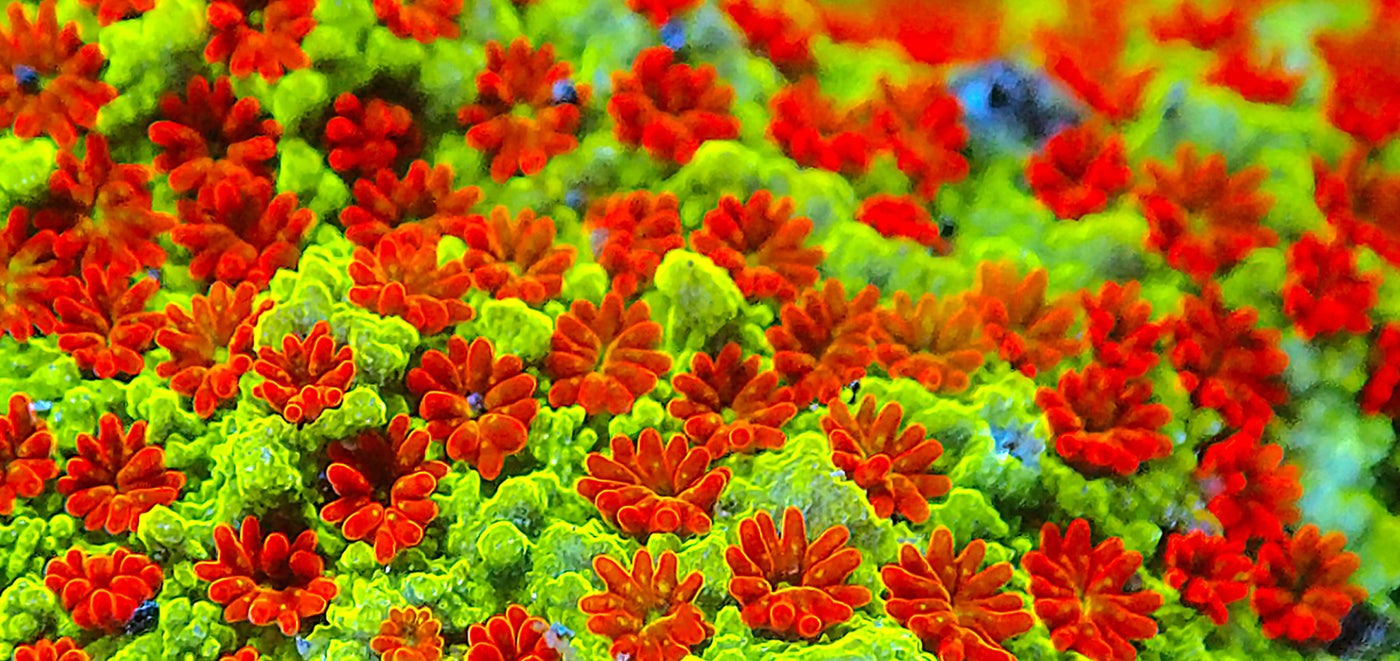
Zoanthids are a reef-keeping classic, known for their distinctive polyps that form dense, colourful mats. These small, colonial polyps are members of the soft coral group and have been a favourite in the hobby for decades. Their hardiness and tendency to spread make them a common sight in both new and established reef aquariums, where they can add patches of intense colour.
Each zoanthid polyp consists of a central oral disc surrounded by a ring of tentacles. They grow connected by a fleshy base called the coenenchyme, which spreads over rockwork. In appearance, they can range from earthy greens and browns to more vibrant shades, often with contrasting colours on the oral disc and tentacles. Polyps will open and close in response to light and water conditions, and when disturbed, they can retract tightly against their mat.
Care for zoanthids is straightforward in a stable reef environment. They do well under a wide range of lighting, from lower PAR values around 50 to higher levels up to 150, but it's wise to acclimate them to brighter light slowly. Moderate water flow is ideal, enough to keep the polyps free of detritus without causing them to remain closed. While zoanthids get much of their energy from photosynthesis, they can benefit from occasional small particle foods. As with any soft coral, it's important to leave space between them and more aggressive corals. Always wear gloves when handling zoanthids, as some species can contain palytoxin.
In a home reef, zoanthids are excellent for adding colour to bare rockwork or creating a "zohanthid garden" on a dedicated rock island. Their mat-like growth means they generally won't overgrow other corals if given adequate space. They are peaceful towards their own kind and different colour morphs can be placed next to each other to create a mixed colony.
This is a WYSIWYG item, so you'll receive the exact specimen pictured.
Our Quarantine Procedures
Our Quarantine Procedures
We take livestock seriously. That's why we don't sell anything we wouldn't be comfortable putting in our own tank.
As we are direct from source, we import and sell direct to the public. This means you can buy with confidence knowing EMA prides itself on excellent handling and conditioning protocols.
Fish
All our fish held in a quarantine system for a minimum of 3 weeks. During this time, regular water changes are performed, and twice daily (or sometimes more) feedings are performed.
Copper is dosed and checked twice a day for ich and velvet.
During this treatment fish are given formalin baths for brooklynella and a minimum of 3 praziquantel doses is performed for flukes.
Coral
Our coral is quarantined for a minimum of 3 weeks, just like fish. During this time, regular water changes are performed, water testing done, and once a month a Fauna Marin ICP Total is performed.
Corals are inspected for pests/general health and are provided with a pest dip once a week for at least 3 weeks.
If we see signs of pests, the quarantine period is extended and/or additional dips are performed
If coral is bleached/unhealthy, it will remain in quarantine until healthy enough to sell.
Payment & Security
We offer a number of different payment methods, including Credit Card, Afterpay, Q Card, Pay at Collection, Bank Transfer and POLi.
Credit card payments are processed securely using the highest possible security protocols.